

RWA and DeFi
How tokenized real-world assets plug into DeFi as collateral, yield sources and liquidity, and where compliance draws the lines.
Published November 16, 2026
RWA and DeFi
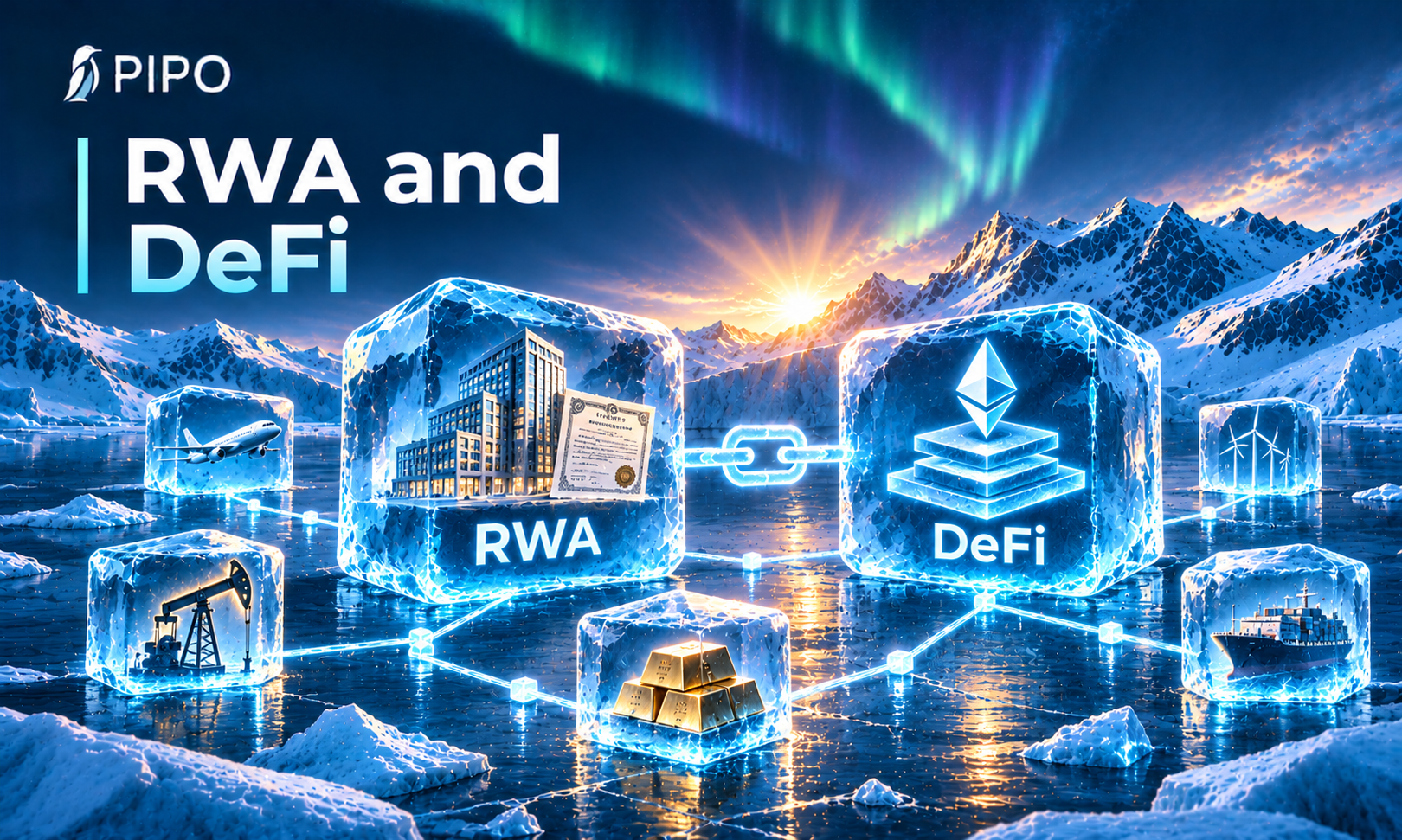
Real-world assets connect to DeFi in three main ways: as collateral for loans, as a source of yield, and as liquidity in on-chain markets. Tokenized Treasuries, for example, let DeFi users earn interest that comes from government debt rather than from crypto speculation. In turn, DeFi gives real assets faster settlement and new ways to be used.
The two worlds need each other, but they work under different rules.
Why DeFi wants real-world assets
Crypto yields tend to swing with market cycles. Real-world assets bring:
- Stable, external yield, for example from short-term government debt
- Collateral that is less volatile than crypto tokens
- Scale, since the real-world asset base is vastly larger than crypto
Why real-world assets want DeFi
- Settlement in minutes, 24/7
- Composability: one token can be held, lent and used as collateral in the same system
- Global reach to investors who already hold stablecoins
Use case 1: Collateral
You deposit a tokenized asset and borrow stablecoins against it. If the asset's value drops too far, the collateral can be sold to repay the loan. Tokenized Treasury funds have been accepted as collateral by several protocols and by some trading venues.
Use case 2: Yield products
Protocols and issuers wrap real-world income, such as Treasury interest or private credit loans, into tokens that pay holders. Users get exposure to that income on-chain. See Tokenized Treasuries and Tokenized Private Credit.
Use case 3: On-chain liquidity
RWA tokens can be traded on decentralised exchanges or in liquidity pools. This can make it easier to enter and exit positions, as long as there is enough depth.
Where compliance draws the line
Most RWA tokens are securities. They carry transfer restrictions so they can only move between verified, eligible wallets. That means:
- They cannot simply be dropped into any open DeFi pool.
- DeFi use tends to happen in permissioned pools or with approved protocols.
- Some issuers offer separate, non-security yield tokens for open DeFi use, with different rights.
This is why "RWA in DeFi" often looks more like a gated garden than an open field.
Risks to keep in mind
- Smart contract risk: bugs or exploits in the protocol
- Asset risk: the real-world asset loses value or the borrower defaults
- Legal risk: the link between token and asset must hold up in court
- Liquidation risk: prices can move faster than an off-chain asset can be sold
- Oracle risk: the price feed can be wrong or delayed
Key takeaways
- RWAs give DeFi stable yield and collateral; DeFi gives RWAs speed and composability.
- Compliance limits which DeFi venues a security token can use.
- You carry both on-chain and off-chain risks.
FAQ
Can I use PIPO instruments in DeFi? PIPO instruments carry transfer restrictions and can only move between verified wallets, so they are not designed for open DeFi pools.
Is RWA yield risk-free? No. Even Treasury-backed products carry issuer, custody and smart contract risks.
What is the most common RWA in DeFi? Stablecoins, followed by tokenized Treasury products.
This lesson is for education only and is not investment, legal or tax advice.